Name the activity first
Recreational practice, rink skating, slalom and aggressive skating use equipment with different purposes. This guide focuses on ordinary adult recreational inline skating. Explain that purpose to a knowledgeable fitter, together with your experience and where you expect to learn. Ask what makes a proposed setup appropriate for that use rather than starting with a brand or a wheel-size target.
Try the complete fit
Use the socks you intend to skate in and follow the manufacturer’s fitting instructions. Check both boots and ask how the closure system should work. Tell the fitter about pressure, heel movement or uncertainty instead of choosing a larger size simply to remove a tight feeling. A fit cannot be confirmed from a size label alone, and discomfort is not something an editorial guide can diagnose remotely.
Understand what can be serviced
Before buying, identify the brake arrangement, compatible replacement parts and the manufacturer’s care instructions. Ask who can handle adjustment or repair when needed. For borrowed or used skates, establish their condition and whether the intended parts are present; the fact that a boot looks tidy does not establish that its wheels, frame and fasteners are ready to use. Do not improvise repairs to an uncertain setup.
Make the comparison concrete
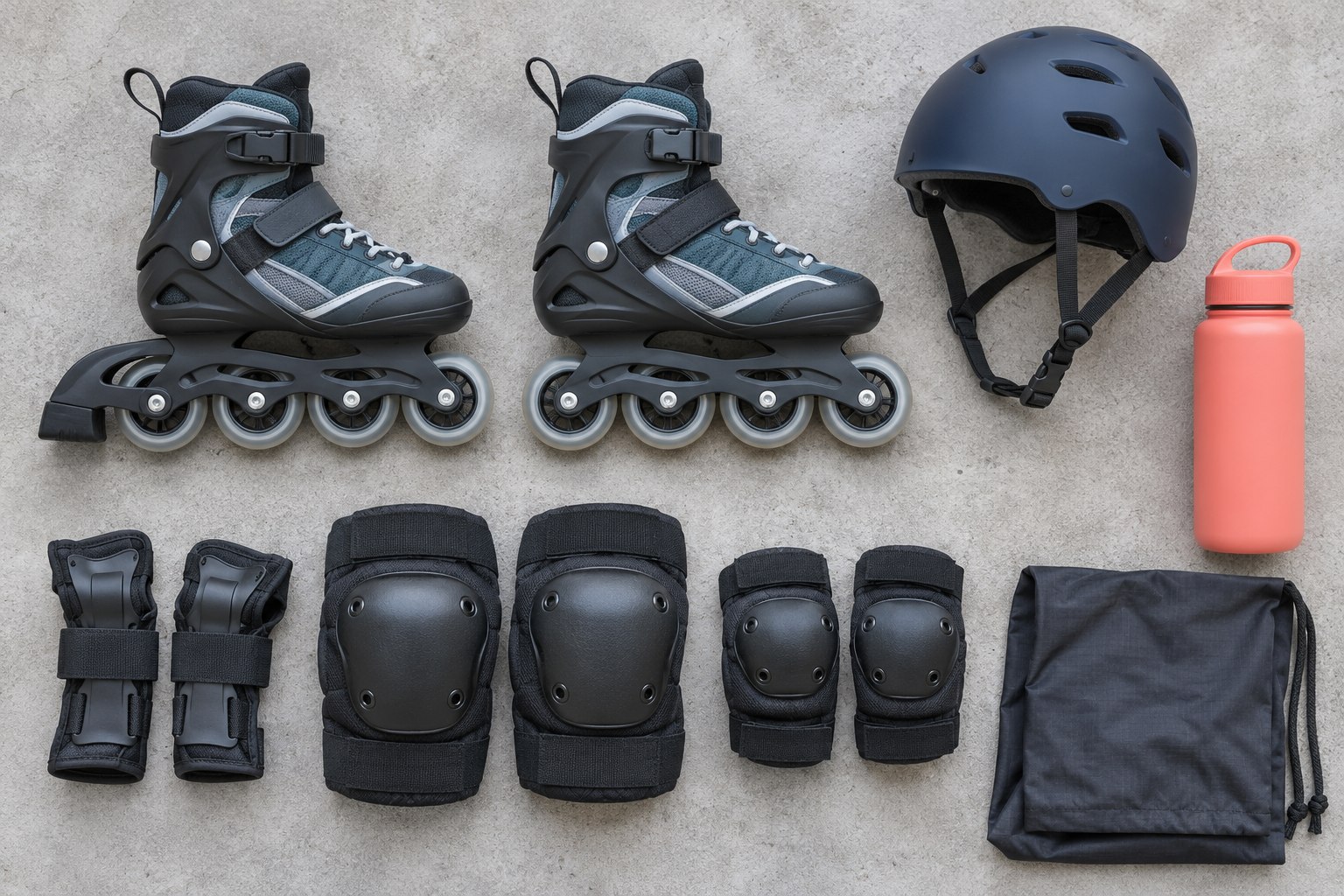
Record three questions for each option: does it fit for the intended use, who can explain its controls, and how will it be maintained? Include the price of appropriate protective equipment when considering a budget. Renting a suitable setup through a lesson can help you understand your preferences before a purchase. Rolling Borders does not sell, bench-test or rank the pictured equipment; the image is an original editorial illustration.
Original editorial notes · 20 November 2026. Sources & scope. This guide is not personalised instruction or an assessment of a venue.